
WEBSITES FOR CONSTRUCTION
Built to be found on site: website design for construction companies and builders in Sussex
A site that ranks for the type of work you do, loads on a phone at the roadside, and turns an enquiry into a job you can price.
Where the work comes from
Three routes to a construction job
Almost nobody hires a builder from a cold search alone. The work arrives through people who already know you, and the site is where each of them checks you out before they pick up the phone. It is one of the sector websites Glo builds, and the build method is the same one used for every website, system and automation on the services page.
Repeat clients
The contractor or developer who used you last year rings again this year. They are not searching; they want to see you are still trading, still insured and still doing the kind of work they remember.
Word of mouth
A recommendation arrives as a name, and the first thing the person does is type it into a phone. What they find in the next thirty seconds decides whether they ring.
Tender lists
A quantity surveyor or a procurement team checks you out before you are added to the list. They want accreditations, recent projects and a company that looks like it will still exist at practical completion.
A construction build
What one looks like
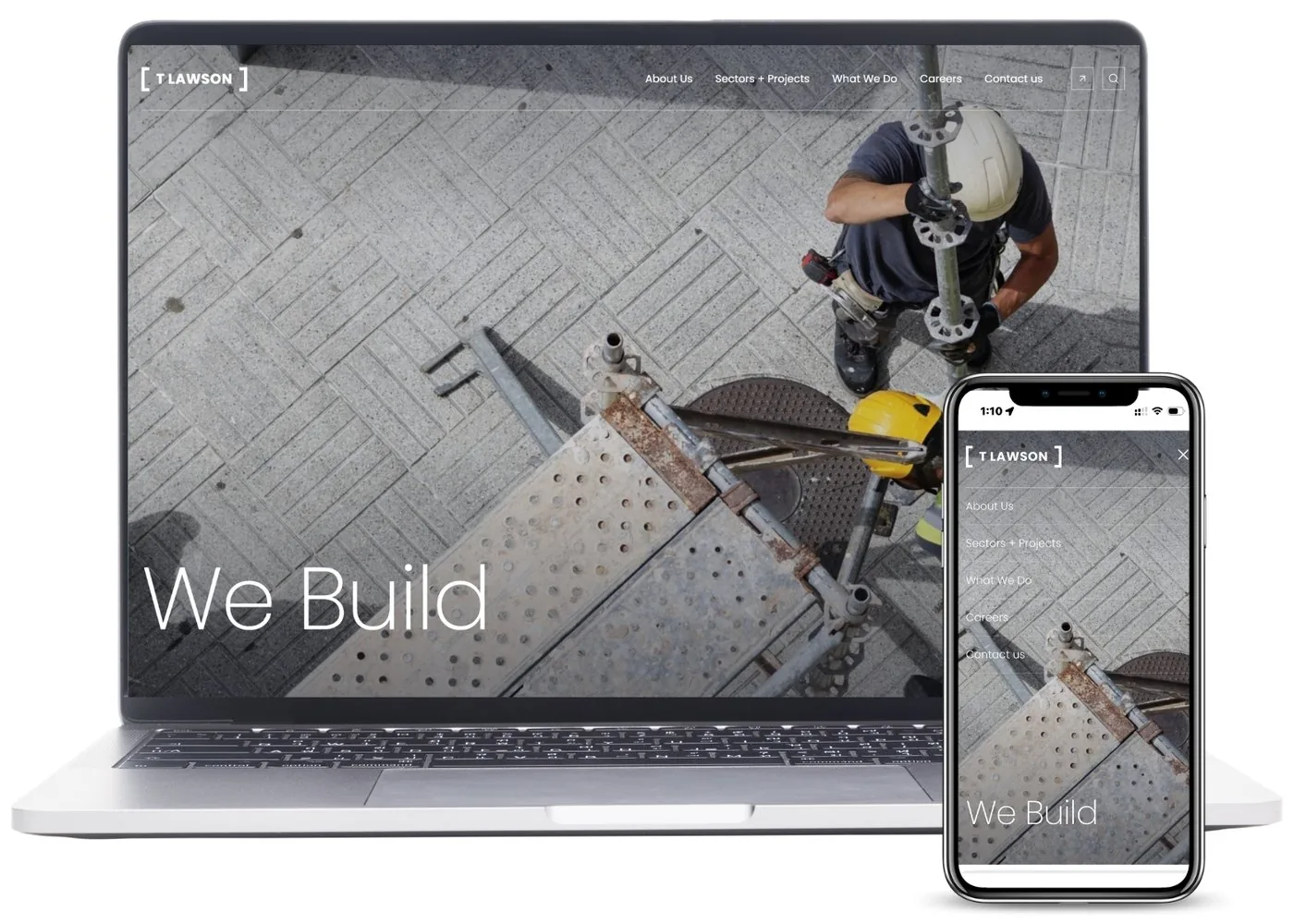
This build had to say what the company builds on the first screen, over its own site photography, and take a quote request from a phone without a form to fight.
What the site has to do
A builder's site is not a brochure
The usual construction site
What this one does instead
A gallery of finished jobs with no words, so nothing on the page can rank.
Each type of work on its own page, written the way the enquiry is typed: extension builder, groundworks contractor, roofing, refurbishment.
Accreditations mentioned in passing, if at all.
Insurance, memberships and health and safety accreditation shown where a tender assessor will look for them.
Photographs taken on site, uploaded at full size, that take ten seconds to load on a phone.
Project photography compressed and sized so the page opens on a van's signal at the side of the road.
A contact form that asks for a name and a message.
A quote request that asks for the postcode, the type of work, the timescale and photographs, so what lands is something you can price.
Anyone typing the company name into a map gets a competitor or nothing.
Google Business Profile set up with the areas you cover, so the local search that converts best finds you.
After the enquiry lands
The quote goes out the same day
A construction enquiry is worth nothing if it waits until Sunday evening for a quote. These four are the parts of Glo written for trades, each sold on its own and each approved by you before anything sends. Two longer reads sit behind them: how to stop chasing invoices, with the fixes that need no software and whether an AI can honestly answer the phone for a trade.
The quote goes out the same day and follows itself up twice before you would have remembered.
Chases the three quotes sitting unanswered and tells you which of them still want the work.
The customer picks a morning or an afternoon and the diary fills itself.
Flags the CSCS card expiring in three weeks before the worker is turned away at the gate.
What it costs
Three grades, published
Essentials and Standard are fixed prices. Advanced is quoted after a scoping call, because a customer portal or a job-tracking system behind the site changes what it has to do. Every site is built by the founder, who has run businesses himself and does the work personally.
Every price, with what each grade includes, is on the pricing page
Questions builders ask
Before you ring
Yes, and it should. A project page with the type of work, the location and a few photographs is the page that ranks for that kind of work in that area. It is also what a tender assessor or a nervous homeowner reads before deciding whether to ring.
If you want to be found for it, yes. A page that covers groundworks, roofing and extensions together ranks for none of them. One page per type of work, written the way people search for it, is the difference between the Essentials grade and the Standard grade on the pricing page.
Yes. The form asks for the postcode, the type of work, the timescale and photographs, so the enquiry that lands is something you can price rather than a name and a phone number you have to ring back.
That is the test it is built to pass. Photographs are compressed and sized for the page, nothing loads that is not needed, and the site is built for Core Web Vitals, the measure Google uses for speed on a phone.
Yes. Memberships, health and safety accreditation and insurance details are placed where a procurement team will look for them, with a page of their own if you hold several. What is shown is what you send; nothing is claimed on your behalf.
Next step
An hour on site, no pitch
Bring the last ten enquiries and the jobs they turned into. A site built for a construction recruitment business is written up in the Avolon Group case study. If your work is closer to lettings than to building, the property page covers estate and letting agents.